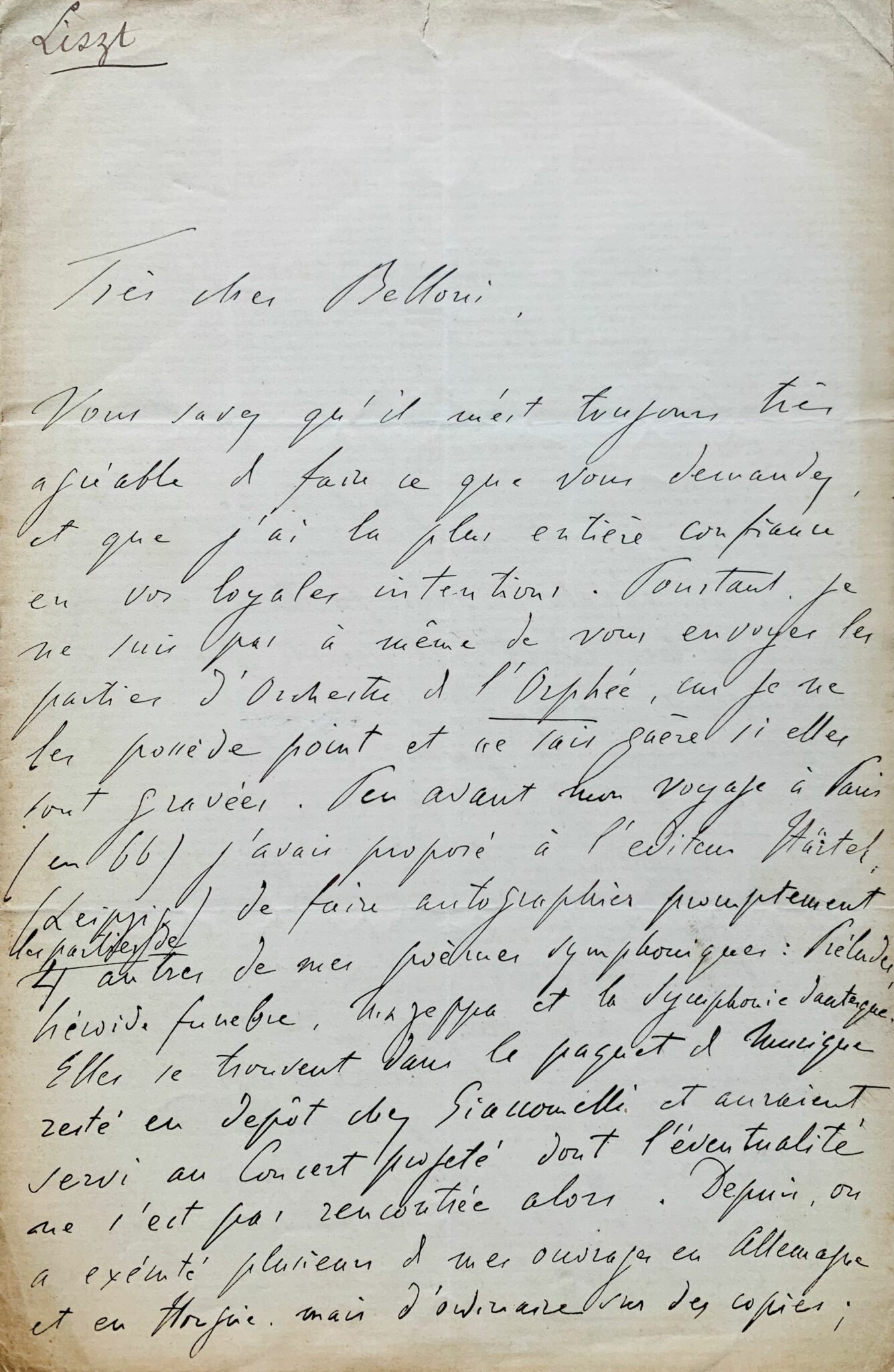
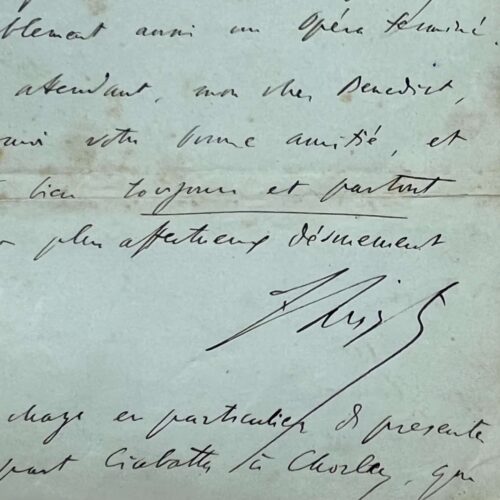
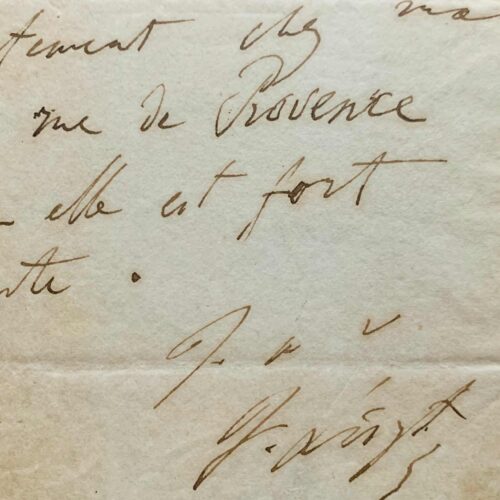
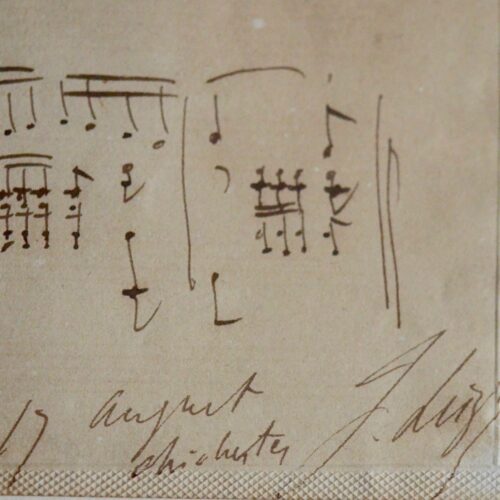
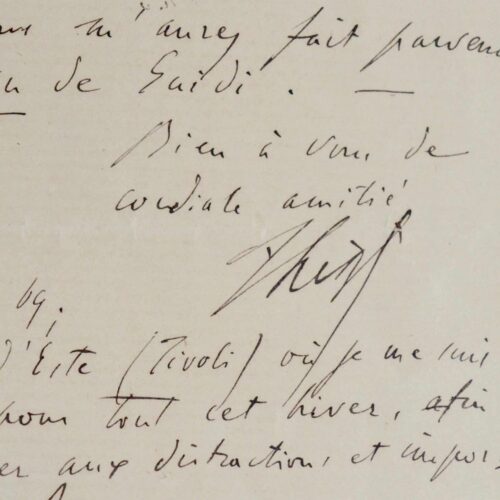
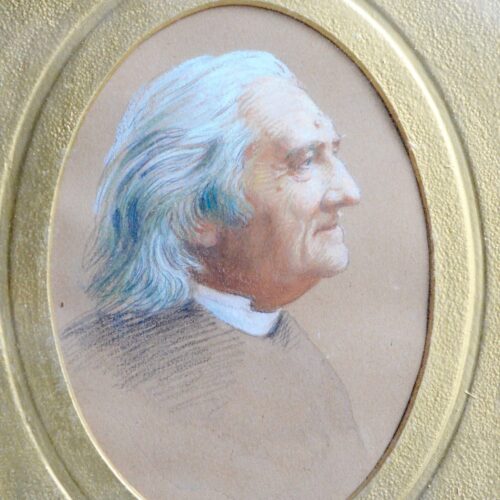
By 1871, Orpheus was already part of Franz Liszt's repertoire of symphonic poems, but its performance in France remained dependent on the availability of orchestral materials and the initiatives of a few champions of his music. Composed in Weimar between 1854 and 1856, Orpheus stands out within the cycle for its particularly spare and contemplative writing, far removed from the dramatic effects that were then often associated with the symphonic poem. In Paris, the Concerts populaires, directed by Jules Pasdeloup, had been providing an important platform for the dissemination of contemporary symphonic repertoire since 1861 and, in 1871, constituted one of the possible venues for the reception of Liszt's music. It was in this context that Gaetano Belloni, the composer's former secretary and then connected to the Parisian musical scene, approached Liszt aboutOrpheus. He replied from Rome on October 18, 1871, as he was preparing to return to Pest.
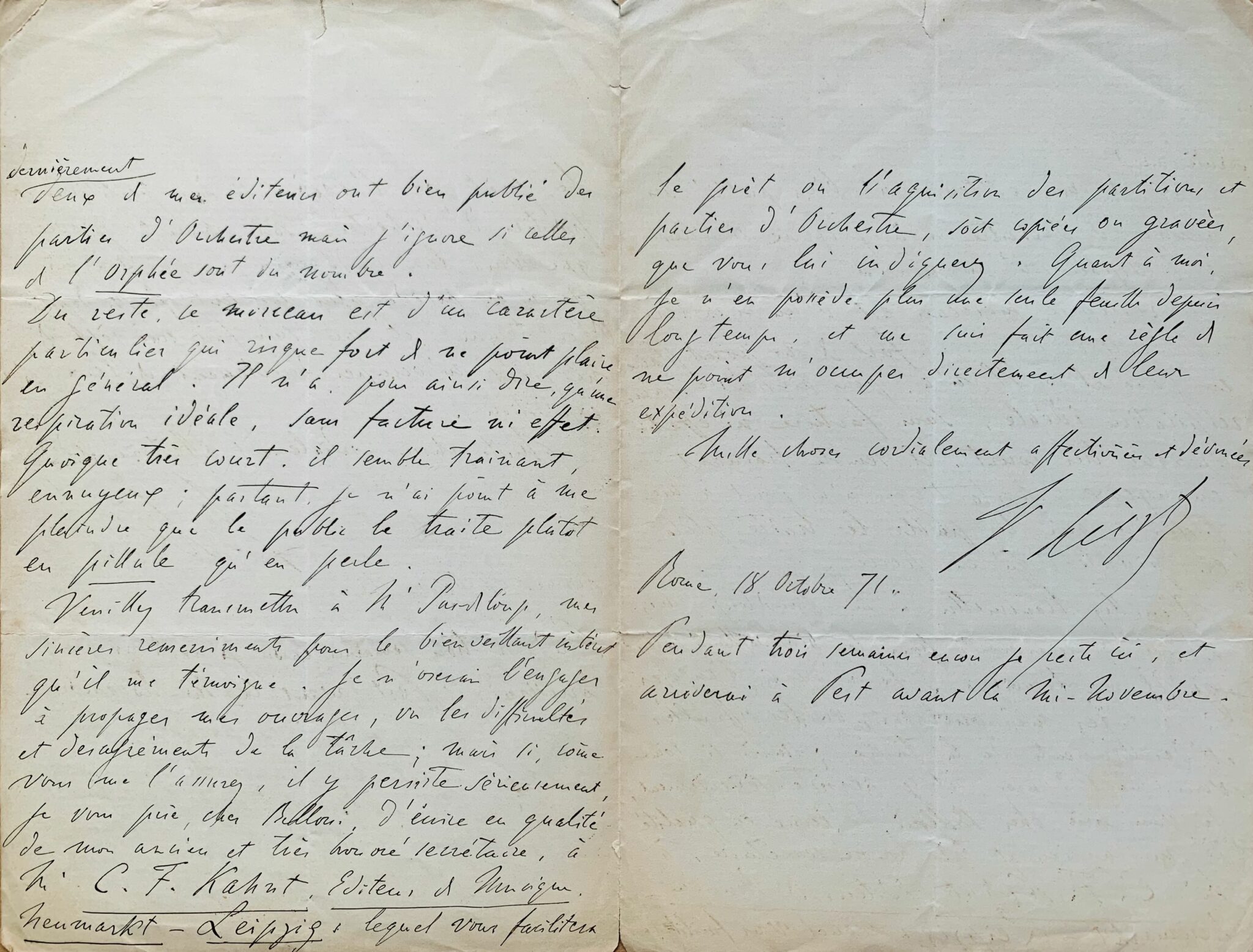
"You know that I am always very pleased to do what you ask and that I have the utmost confidence in your good intentions. However, I am unable to send you the orchestral parts of Orpheus, as I do not possess them and do not know if they have been engraved. Shortly before my trip to Paris (in 1966), I proposed to the publisher Härtel (Leipzig) that he promptly autograph the parts of four other symphonic poems of mine: Preludes, Heroides Funèbre, Mazeppa, and the Dantesque Symphony. They are in the packet of music left in Giacomelli's care and would have been used for the planned concert, which unfortunately did not materialize at the time. Since then, several of my works have been performed in Germany and Hungary, but usually from copies; recently, two of my publishers have indeed published orchestral parts, but I do not know if those of Orpheus are among them."
Moreover, this piece has a peculiar character that is very likely to displease the general public. It possesses, so to speak, only an ideal breath, lacking structure or effect. Although very short, it seems dragging and tedious; yet I have no reason to complain that the public treats it more like a pill than a pearl.
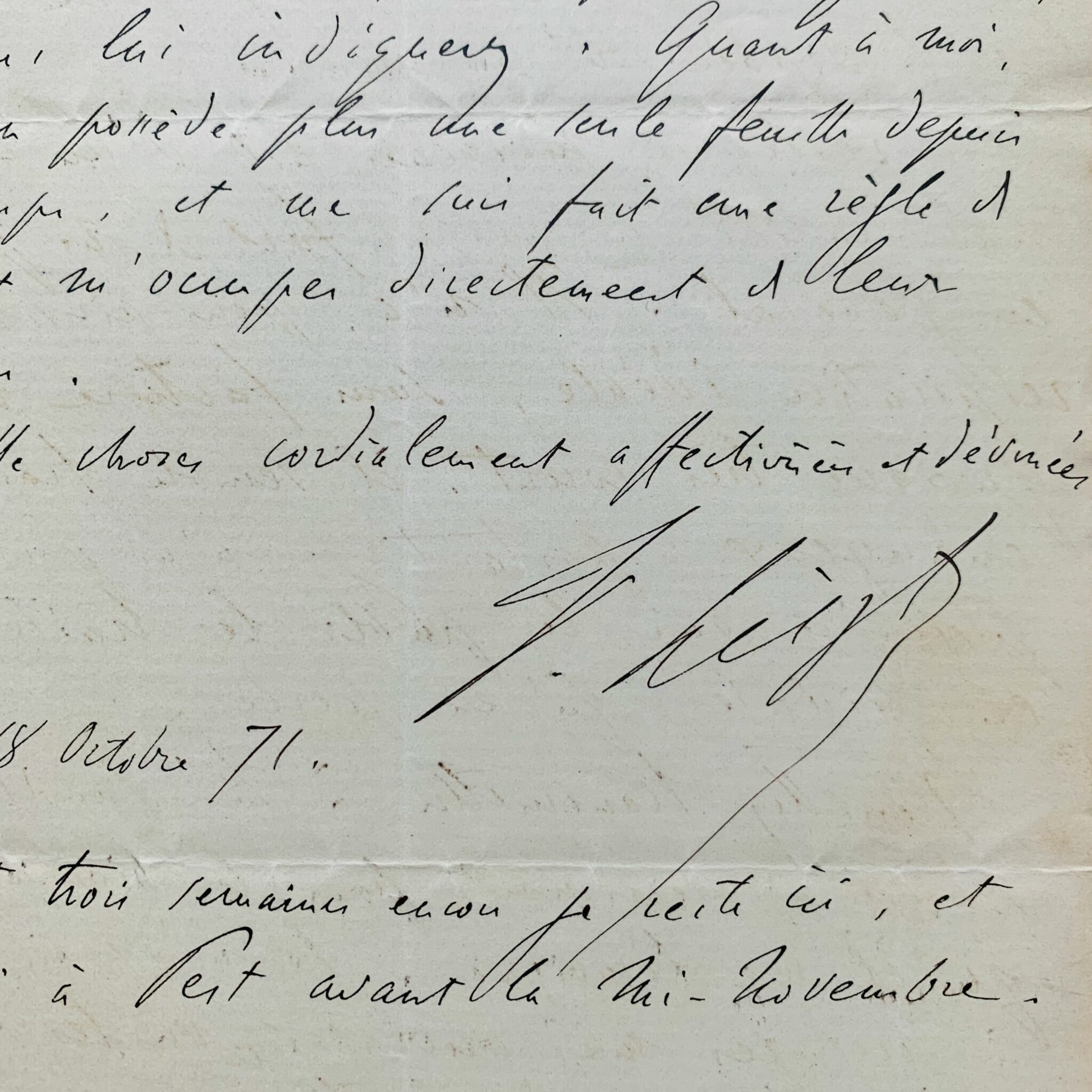
Please convey to Mr. Pasdeloup [the conductor and pianist Jules Pasdeloup (1819-1887)] my sincere thanks for his kind interest. I would not dare urge him to distribute my works, given the difficulties and unpleasantness of the task; but if, as you assure me, he seriously persists, I ask you, dear Belloni, to write, in your capacity as my former and highly esteemed secretary, to MCF Kahut, music publisher, Neumarkt – Leipzig, who will facilitate the loan or acquisition of the scores and orchestral parts, whether copied or engraved, that you indicate to him. As for myself, I have not possessed a single sheet for a long time, and I have made it a rule not to concern myself directly with their distribution.
A thousand warmest and most devoted regards
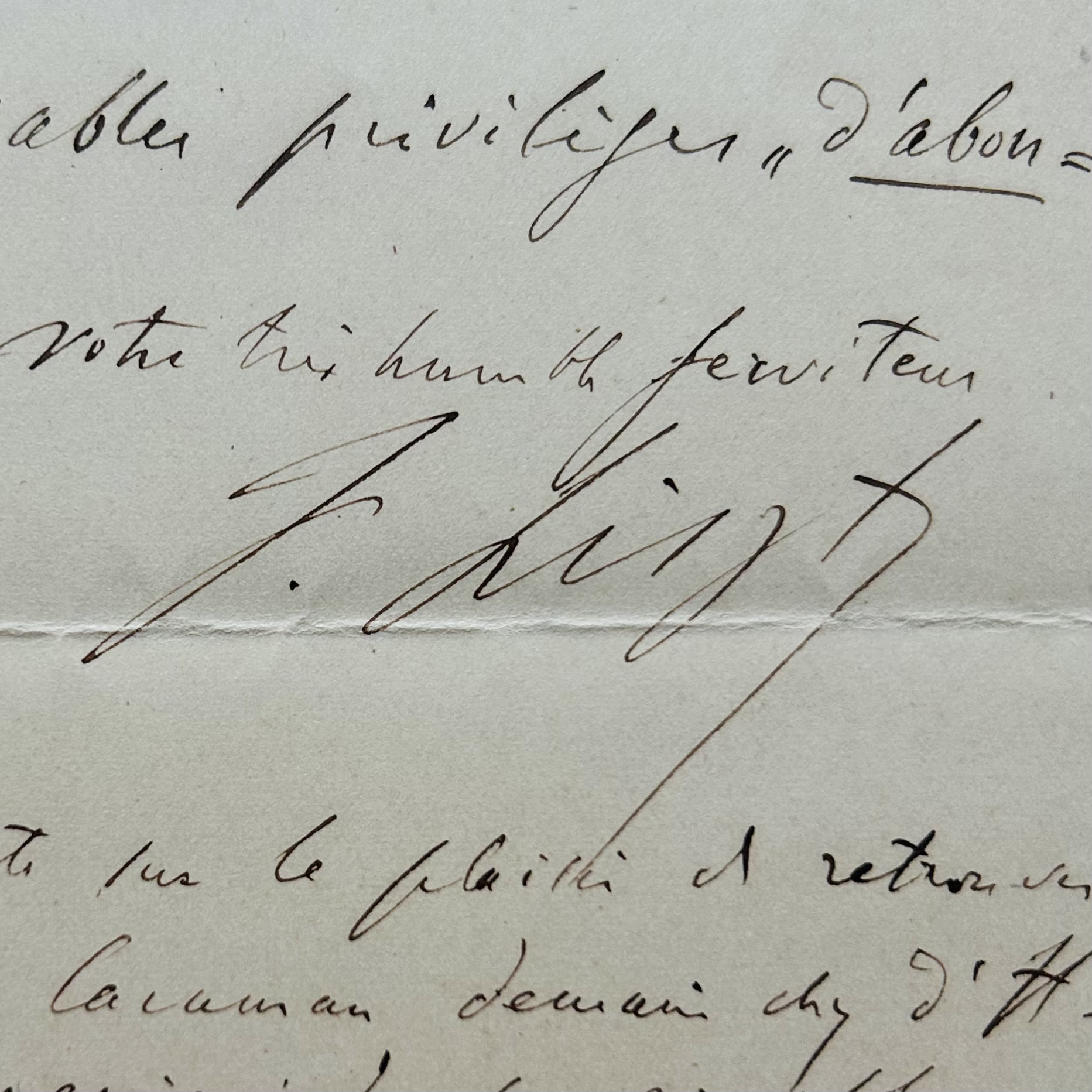
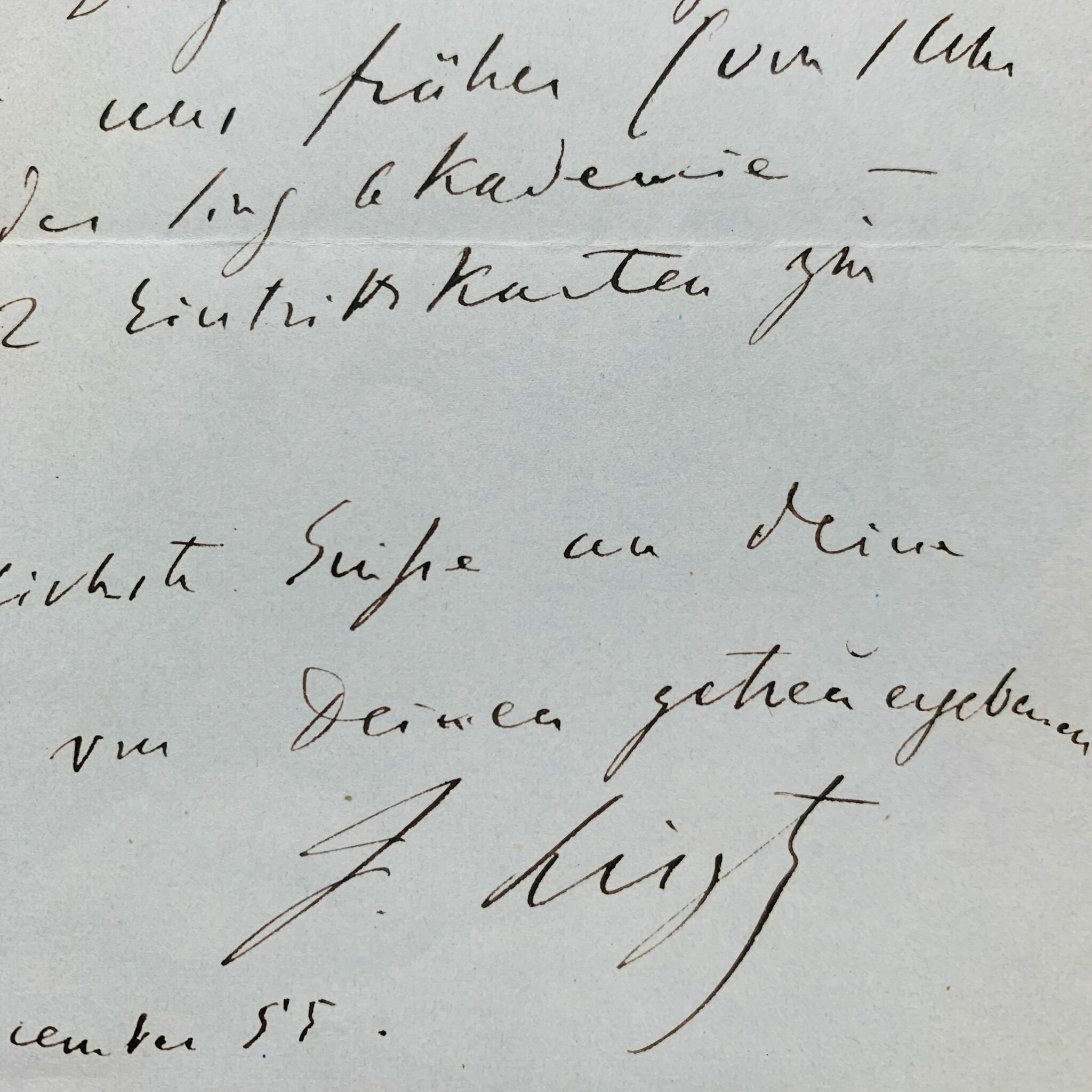
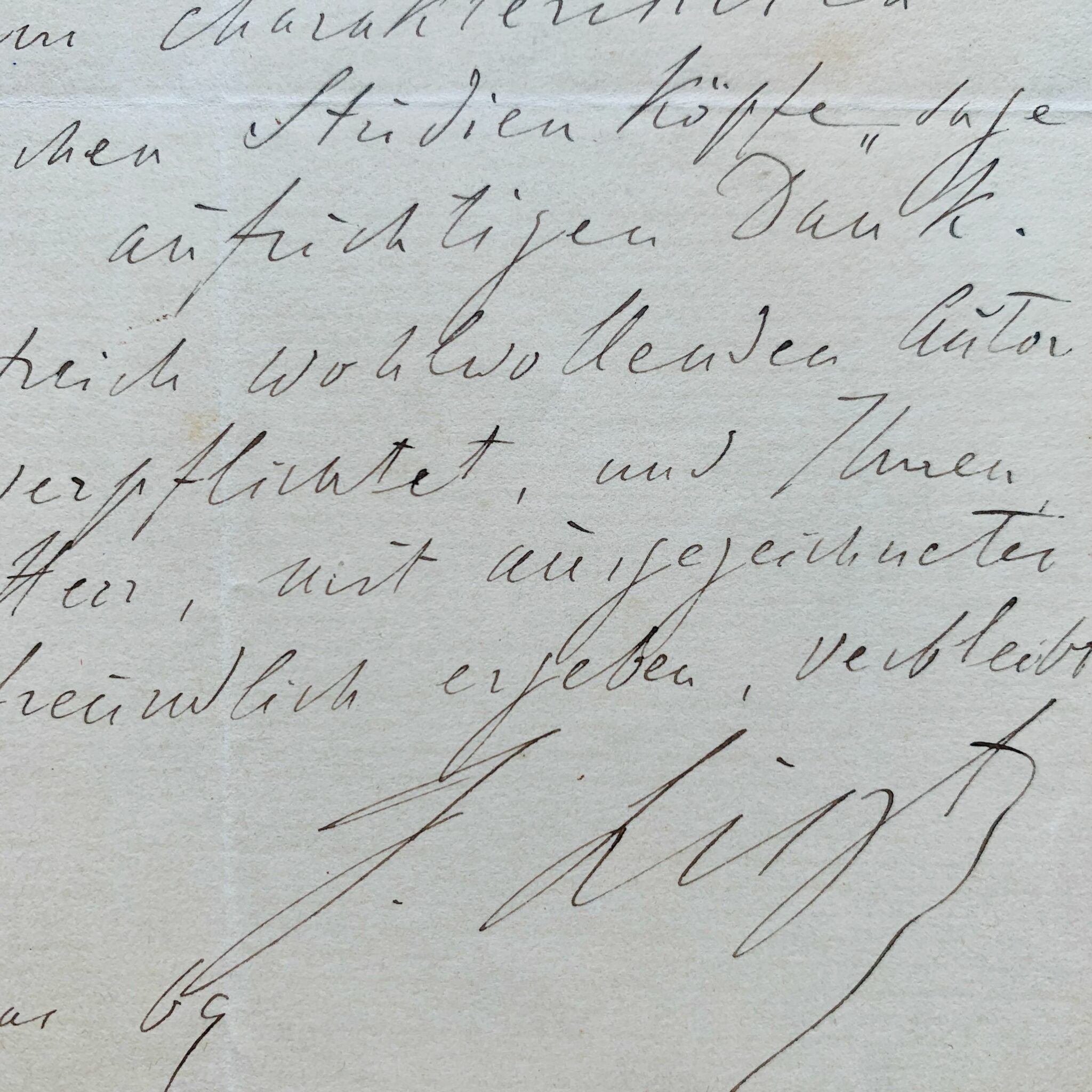
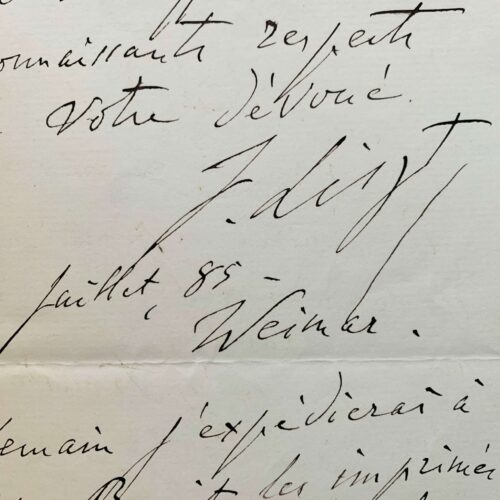
F. Liszt
Rome, October 18, 71
I will remain here for another three weeks, and will arrive in Pest [in Hungary] before mid-November.".
Reduce