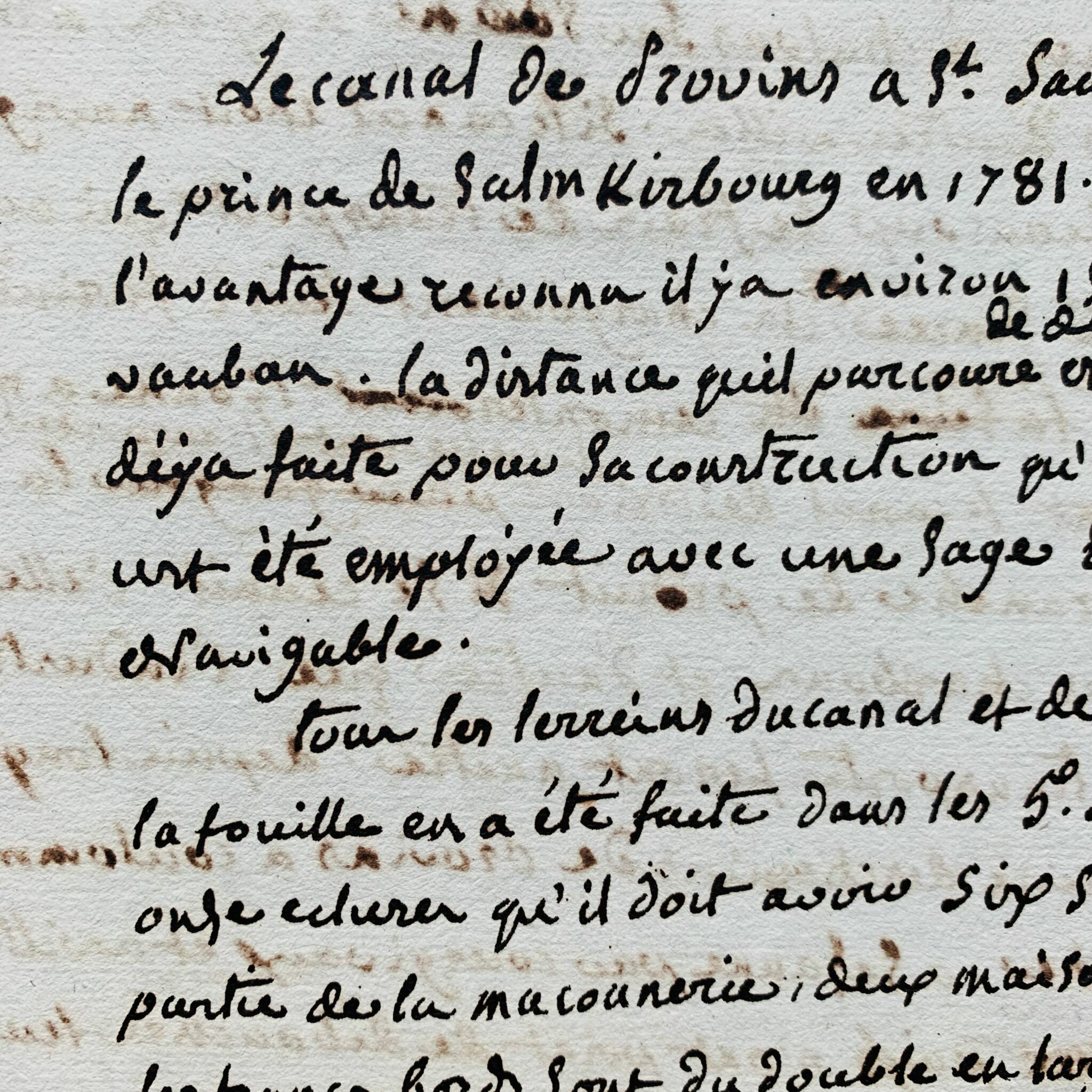
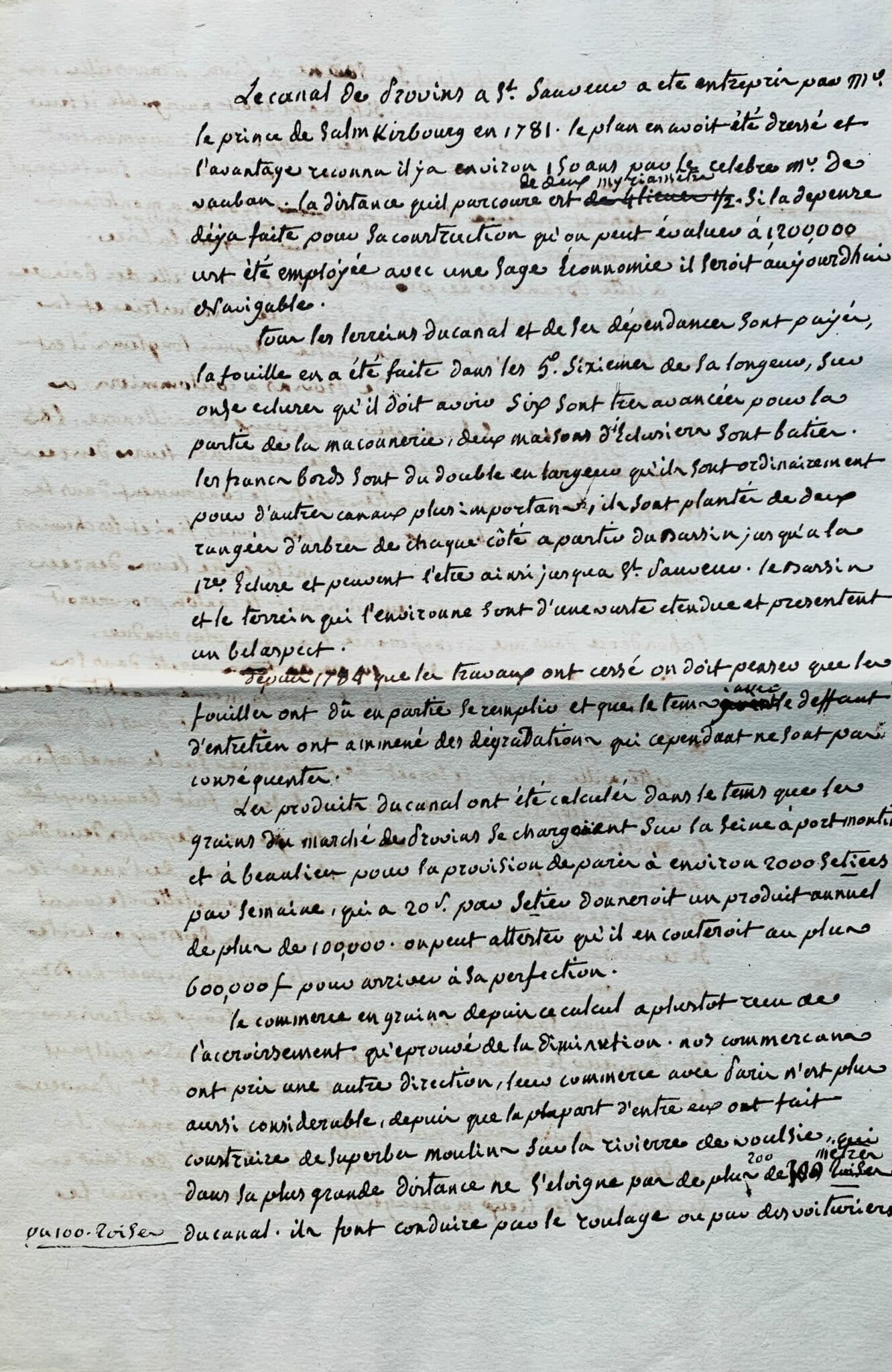
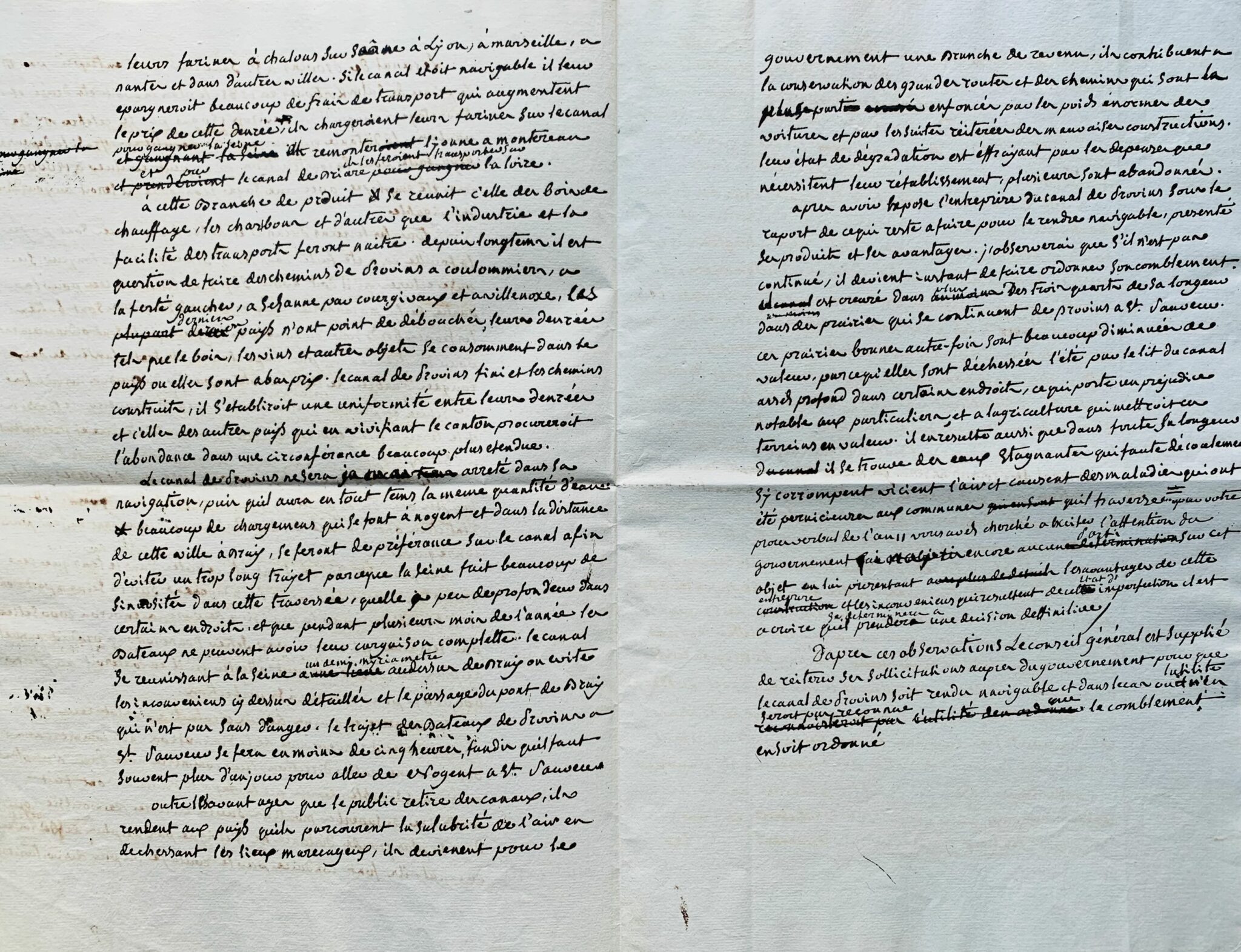
A late 18th-century manuscript, in an unidentified hand (a draft with erasures and corrections), concerning the completion of the Provins Canal.
This very interesting memorandum aims to persuade others to finish the Provins Canal (which was intended to connect Provins to the Seine at Saint-Sauveur-lès-Bray and prevent flooding of the Voulzie River); work had begun in 1781 and was interrupted by the Revolution. The author provides an overview of the construction site and then argues for its completion…
Read moreLate 18th century manuscript, in an unidentified hand (draft with erasures and corrections) relating to the completion of the Provins canal.
This highly interesting report aims to persuade the public to complete the Provins canal (which was intended to connect Provins to the Seine at Saint-Sauveur-lès-Bray and prevent flooding of the Voulzie River); work had begun in 1781 but was interrupted by the French Revolution. The author provides an overview of the construction site and then argues for its completion in order to boost the prosperity of Provins' trade. “[…] All the land for the canal and its appurtenances has been paid for; excavation has been completed along five-sixths of its length; of the eleven locks it is to have, six are well advanced in terms of the masonry work, and two lock-keeper's houses have been built […]. The canal's revenues were calculated based on the time when grain from the Provins market was loaded onto the Seine at Port-Martin and Beaulieu to supply Paris, at approximately 2,000 setiers per week, which, at 20 sous per setier, would yield an annual revenue of over 100,000 […]. Our merchants have taken a different direction; their trade with Paris is no longer as substantial, since most of them have built magnificent mills on the Voulsie River […]. If the canal were navigable, it would save them considerable transport costs, which increase the price of this commodity […]. The Provins canal will never be stopped in its navigation, since it will have the same quantity of water at all times. Many shipments made at Nogent and along the route from that town to Druix will preferably be made on the canal to avoid a long journey because the Seine is very meandering in this section and is quite shallow in some places [...]. The journey by boats from Provins to Saint-Sauveur will take less than five hours, whereas it often takes more than a day to go from Nogent to Saint-Sauveur [...]. After having described the Provins canal project in terms of what remains to be done to make it navigable, and presented its benefits and advantages, I will observe that if it is not continued, it becomes (urgent?) to order its filling in, because the meadows on which it is being dug have since dried out due to the digging, and there is stagnant water that festers and causes disease..
Reduce