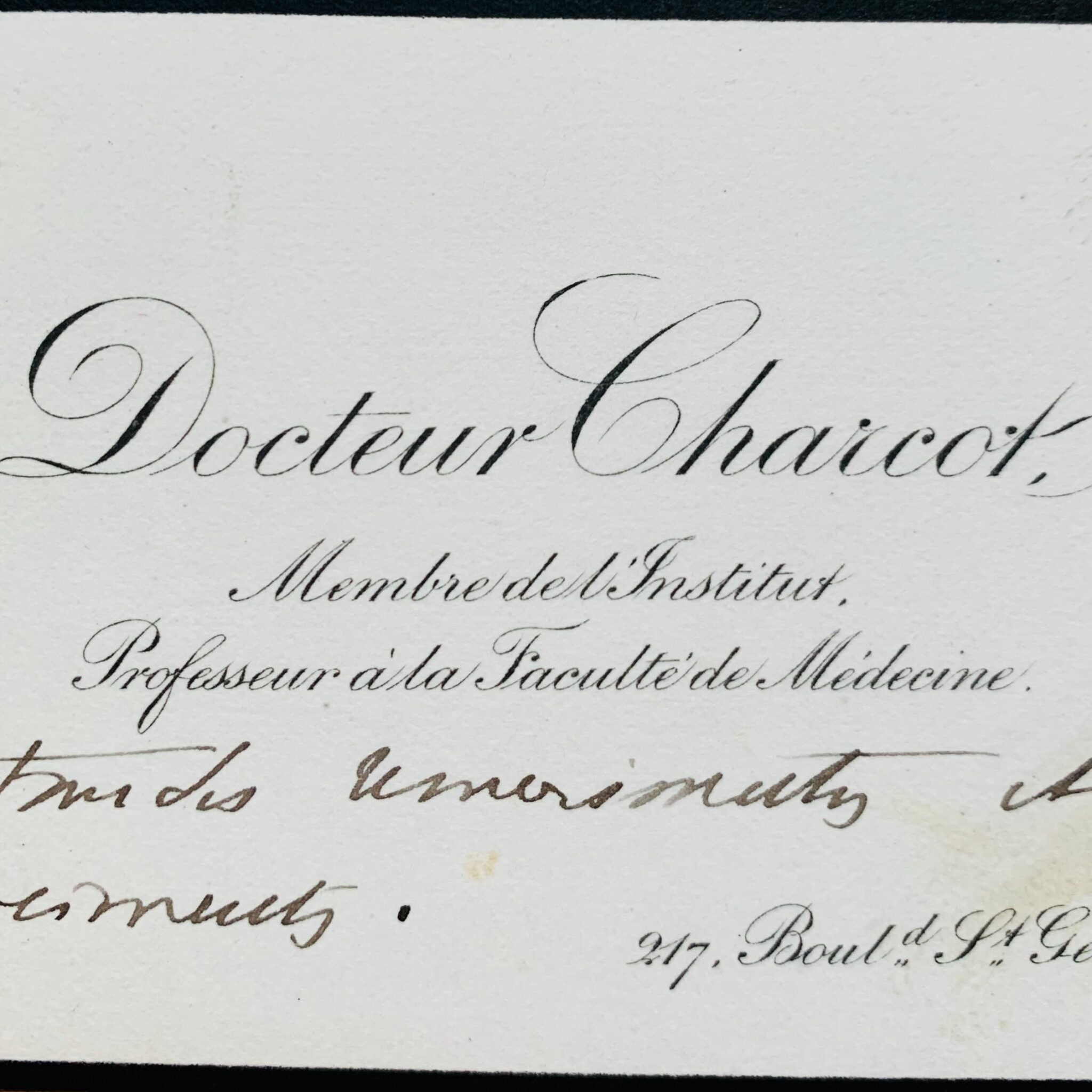
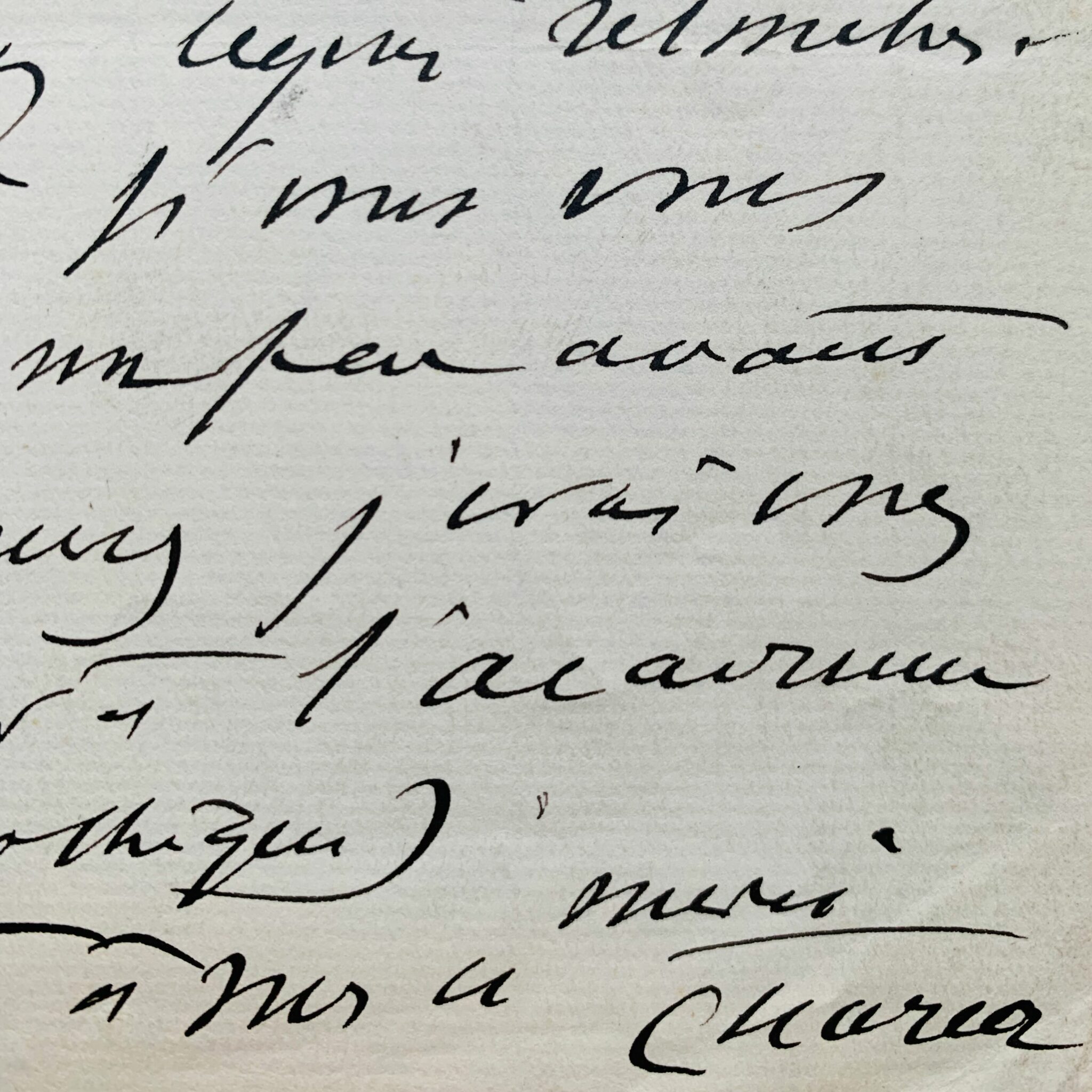
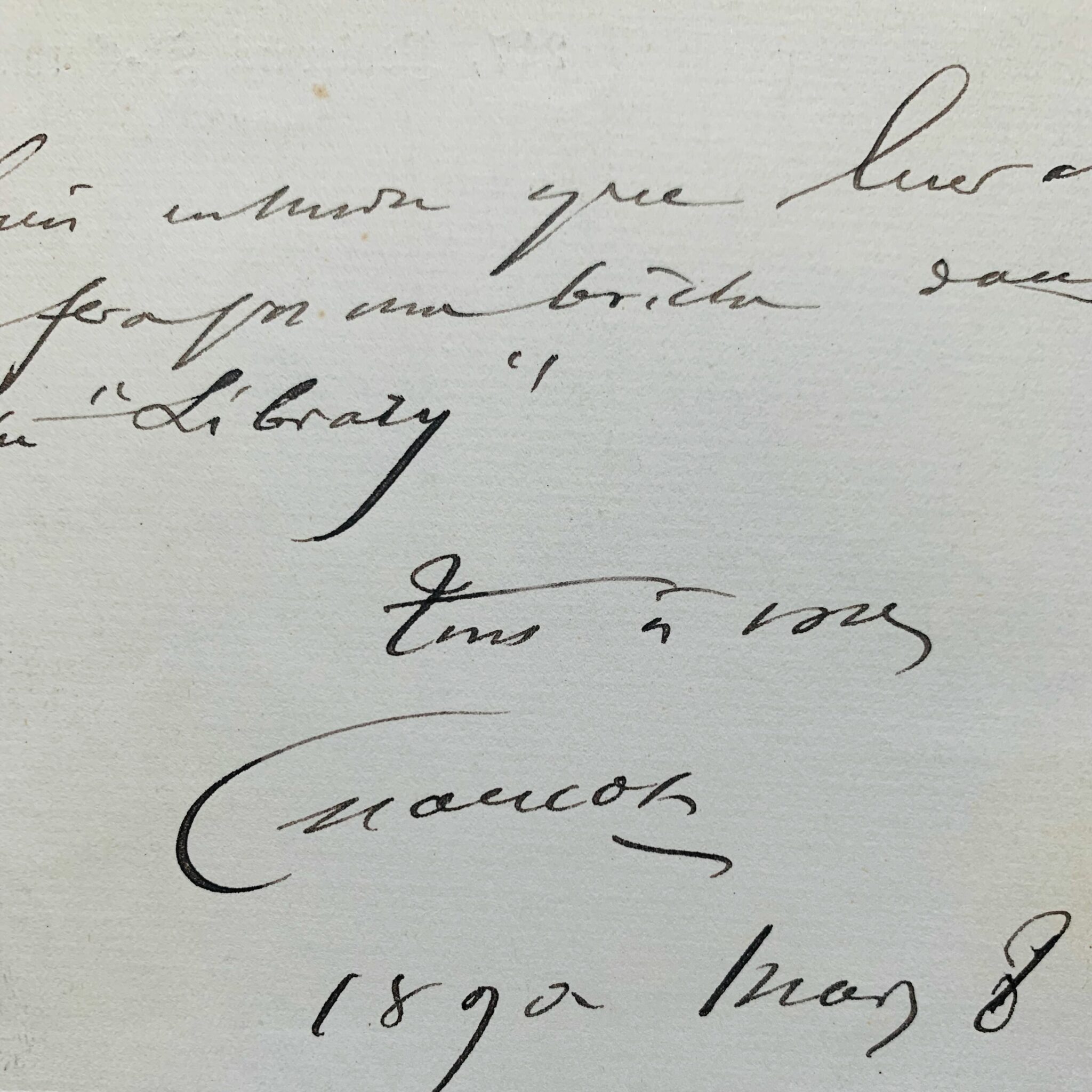
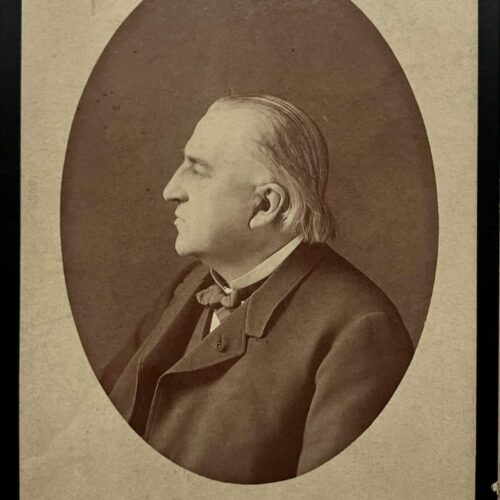
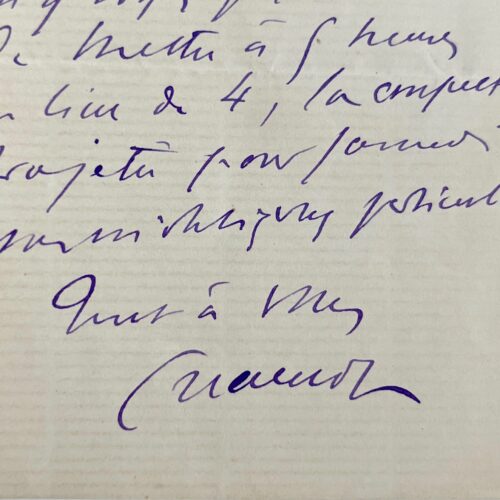
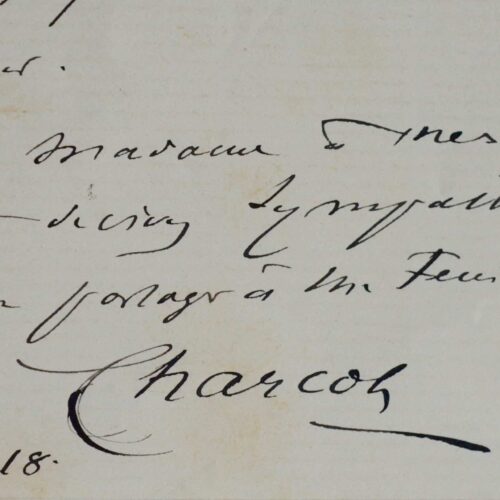
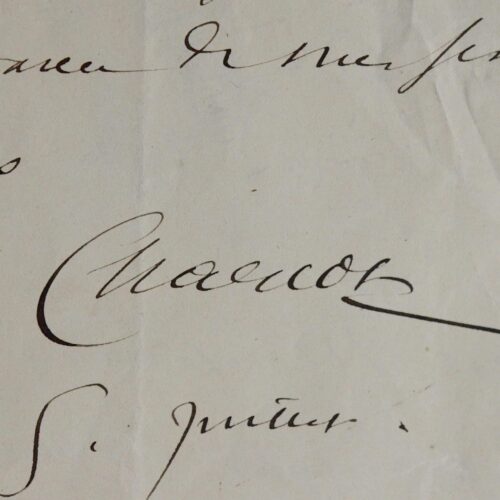
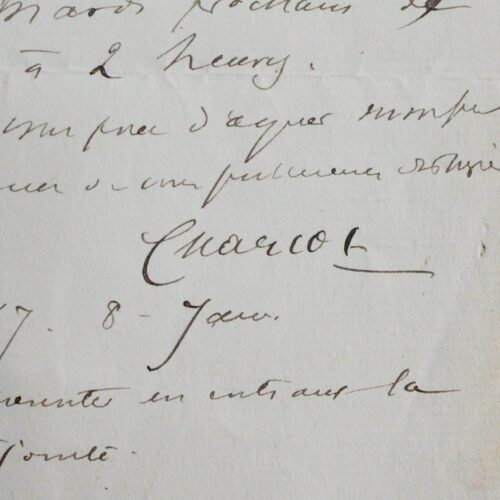
Jean-Martin Charcot sought the help of one of his colleagues [possibly the physician Adolphe Thierry, discoverer of the Contrexéville mineral spring] to treat a patient from the Russian aristocracy suffering from aortic dilation and large kidney stones.
"My dear colleague,
Mr. de Poliakof of St. Petersburg is one of my former patients. He has aortic dilation, long diagnosed by Botkin, which occasionally produces dysphasic episodes, sometimes…
Read moreJean-Martin Charcot sought the help of one of his colleagues [possibly the physician Adolphe Thierry, discoverer of the Contrexéville mineral spring] to treat a patient from the Russian aristocracy, suffering from aortic dilation and significant kidney stones.
"My dear colleague,
Mr. de Poliakof of St. Petersburg is one of my former clients. He has a long-standing aortic dilation, diagnosed by Botkin, which occasionally produces dysphasic episodes, sometimes with hemoptysis. Lately, he has also experienced slight swelling of the liver and spleen, occasional swelling of the lower limbs, and a small amount of albumin in his urine. But the matter that concerns me at the moment, and which prompted my trip to Contrexéville, is the habitual passage of sand, and the two times he expelled rather large pebbles, which, of course, did not pass without causing severe pain.
I highly recommend Mr. de Poliakoff, in whom I have a particular interest, and I ask you to accept the assurance of my devoted sentiments. Charcot. June 29, 1887.
In the case of hemorrhage, Botkin and I emphasize Digitalis and Thebaic extract [based on opium], as you will see from our prescriptions.
[Sergei Petrovich Botkin (1832-1889) was a famous Russian physician and assistant to Pavlov. The patient in question is probably Samuel Polyakov (1837-1888), a Russian businessman and railway magnate in the Russian Empire; his family hosted Charcot during his trip to Russia a few years later.].
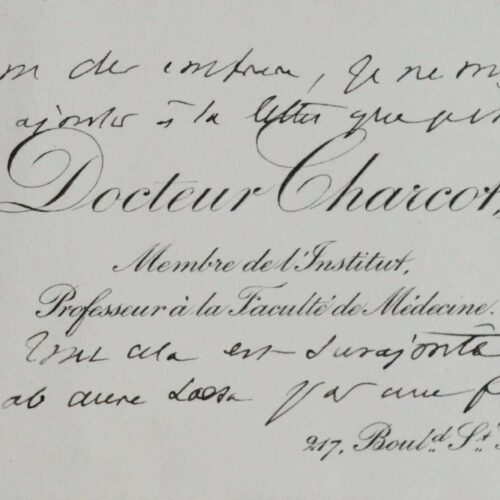
ReduceLetterhead at his address: 56 rue Pierre Charron.