In 1573, the Duke of Anjou, the future King Henry III, led the siege of La Rochelle at the head of the Catholic and Royal Army. Tasked by his brother, King Charles IX, with retaking this important Protestant stronghold, he encountered fierce resistance from the inhabitants of La Rochelle. Despite several assaults, the siege dragged on, revealing the difficulties the royal power faced in imposing its authority in the face of the religious divisions tearing the kingdom apart. Beginning on February 11, the siege was lifted on June 26, 1573…
Read moreIn 1573, the Duke of Anjou, the future King Henry III, led the siege of La Rochelle at the head of the Catholic and Royal Army. Tasked by his brother, King Charles IX, with retaking this important Protestant stronghold, he encountered fierce resistance from the inhabitants of La Rochelle. Despite several assaults, the siege bogged down and revealed the difficulties the royal power faced in asserting its authority in the face of the religious divisions tearing the kingdom apart. Beginning on February 11, the siege was lifted on June 26, 1573, the Duke of Anjou having, in the meantime, been elected King of Poland (on May 11; he was crowned in Krakow on February 21, 1574).
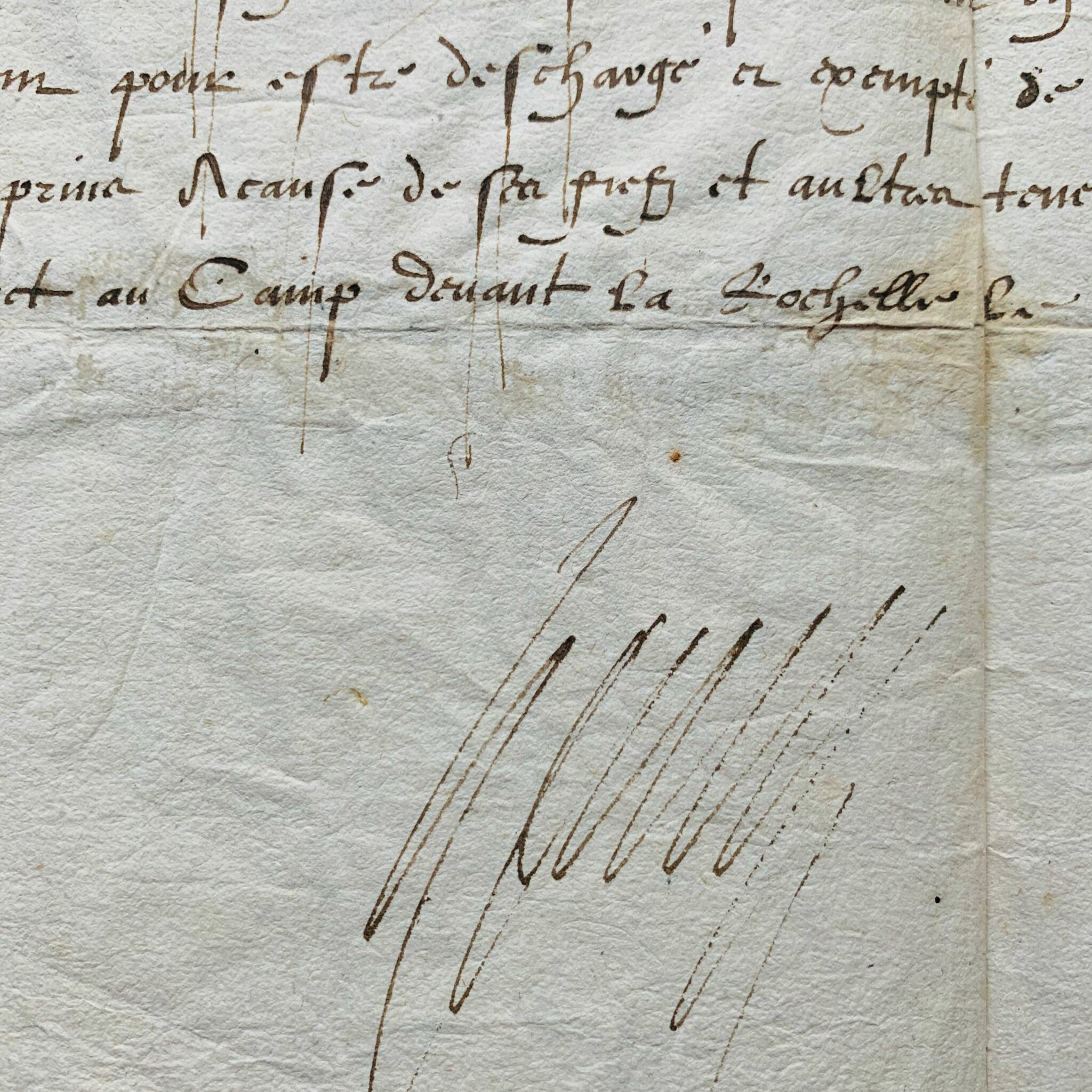
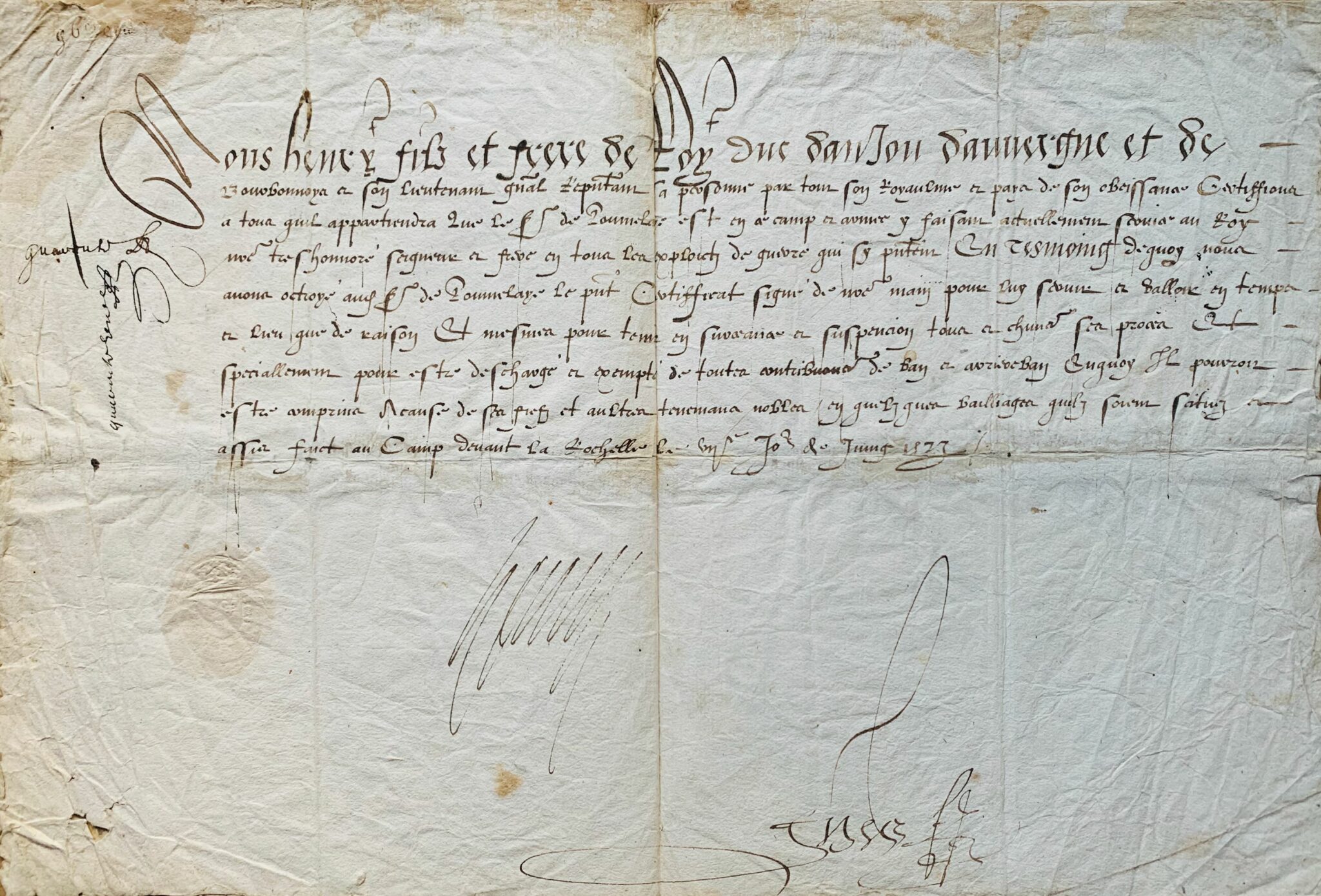
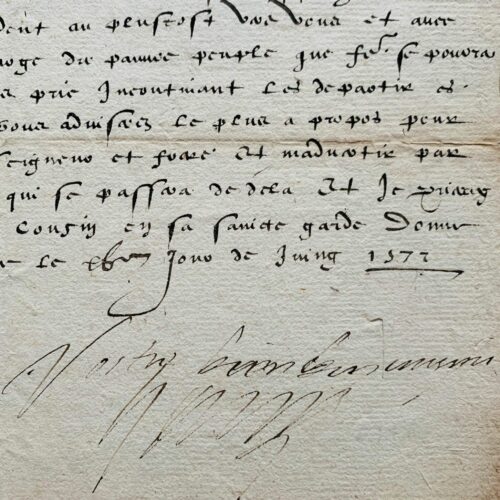
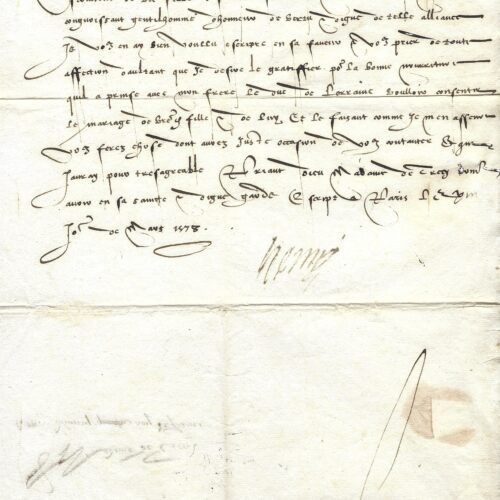
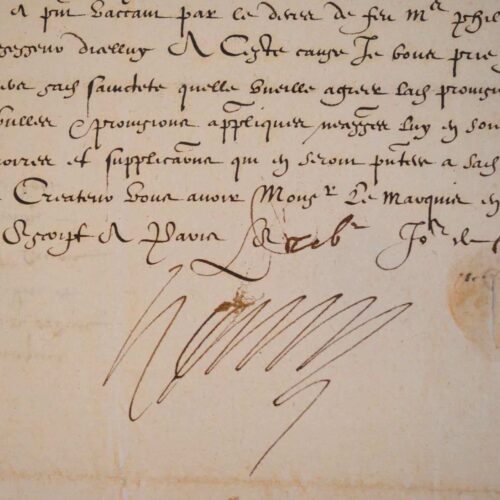
By this document, signed in his own hand, "at the camp before La Rochelle," he testifies to the services rendered by the Sieur de Poumelaye [Pommelaye?] to the Catholic and Royal Army. "We, Henry, son and brother of the King, Duke of Anjou, Auvergne, and Bourbonnoys […] certify to all that it may concern that the Sieur de Poumelaye is at this camp and army, currently serving the King, our most honored lord and brother, in all the exploits of war that arise there, in witness whereof we have granted to the said Sieur de Poumelaye this present certificate, signed by our hand, to serve and be valid for him in due time and place, and even to hold in suspense and suspension all and everyone's legal proceedings […].".
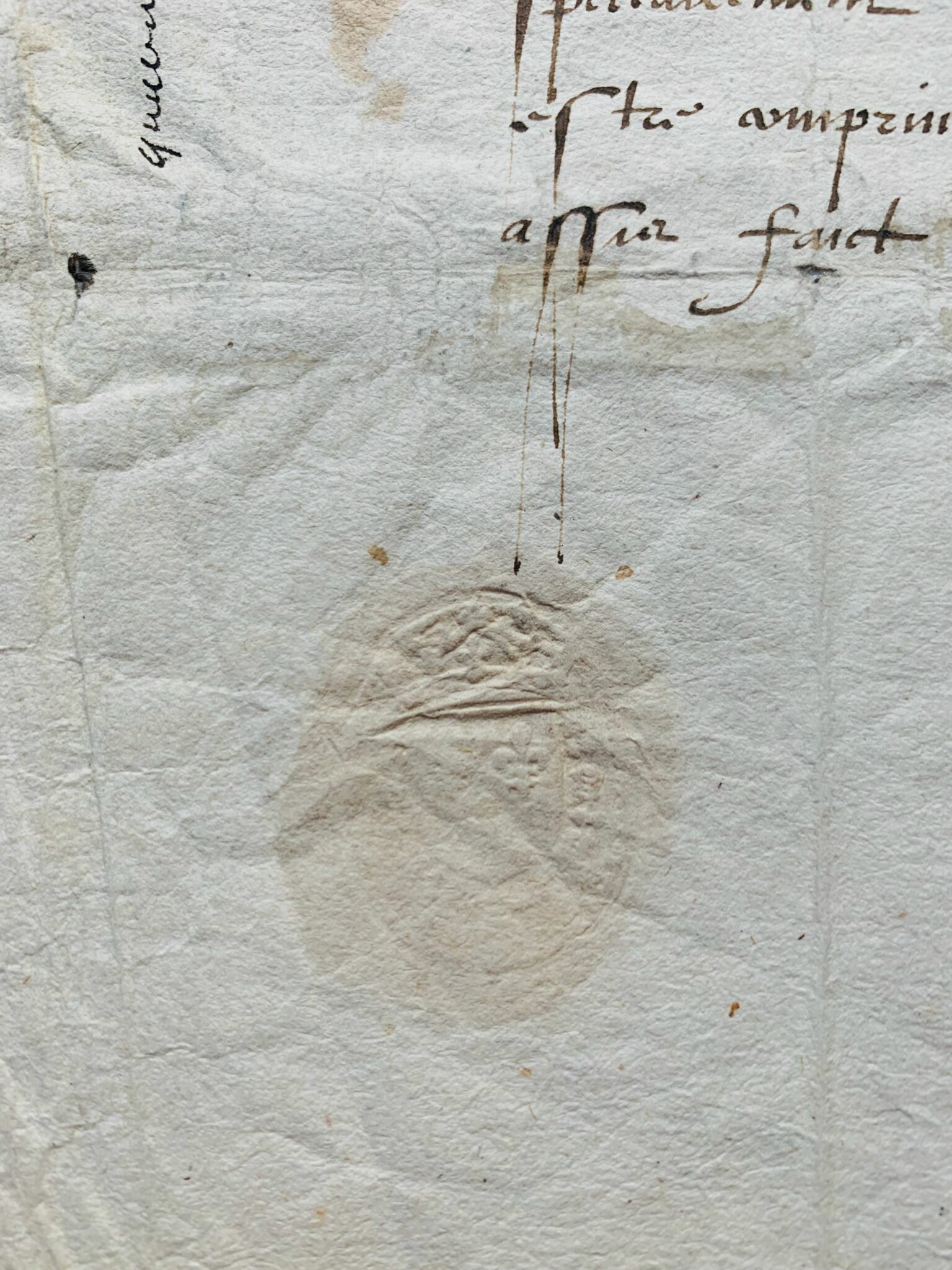
ReduceSmall embossed stamp. Full transcript attached.